
The Retrofit Imperative: How to Modernize Aging Telecom Power Plants Without a Network Shutdown
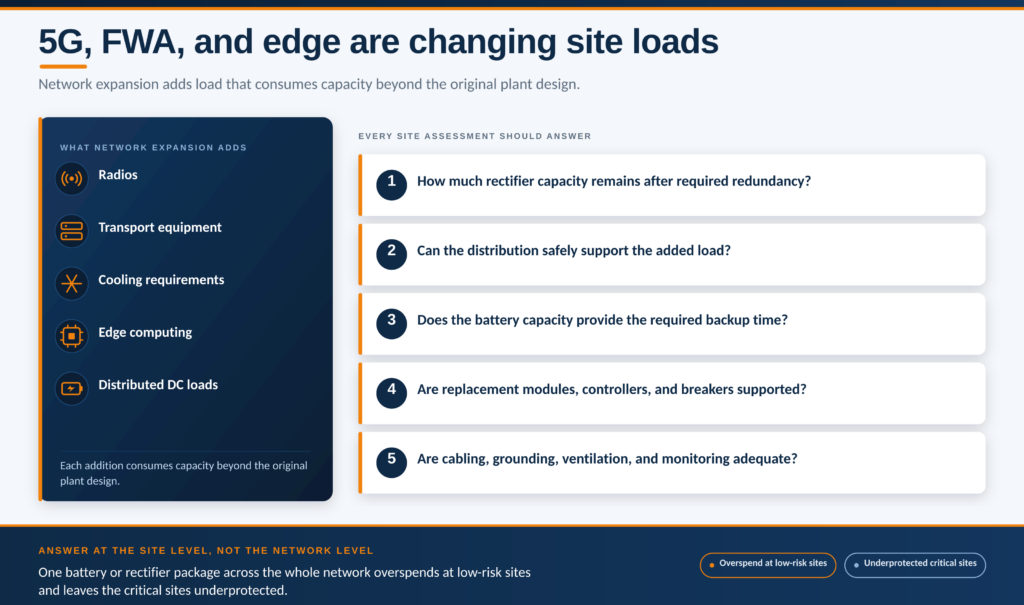
A telecom power plant retrofit is becoming a network priority as 5G, fixed wireless access, and edge infrastructure place new demands on aging 48V DC systems. Ericsson projects that global 5G subscriptions will exceed 2.9 billion and fixed wireless access connections could reach 350 million by 2030. Much of that growth is landing on brownfield telecom sites built for smaller loads.
Operators need more capacity and resilience. Critical sites must remain online during modernization.
Aging telecom power plants are now an executive risk
Legacy DC power plants create risk across capacity, equipment support, and network uptime.
A plant that appears stable under normal utility power may have limited rectifier headroom, undersized distribution, aging breakers, obsolete controls, deteriorating cabling, or a battery system that cannot deliver the required runtime under full load. These weaknesses often stay hidden until a utility interruption, load increase, or equipment failure exposes them.
The FCC’s updated requirements for reporting outages affecting 911 and 988 services took effect in April 2025. NOAA’s disaster database also documents storms and flooding that have damaged electrical and cellular infrastructure.
Telecom backup power now functions as a network continuity program.
Where legacy power systems fail first
 Obsolescence is difficult because a functioning plant can still carry serious support risk. When a manufacturer discontinues a controller, rectifier module, or distribution component, operators may depend on limited spares, secondary-market parts, or temporary repairs.
Heat is another major failure driver, especially in outdoor cabinets and shelters. High temperatures accelerate battery wear and increase cooling requirements. The development of specialized high-temperature batteries for telecom outside plant applications reinforces a broader point: battery chemistry and design need to match actual site conditions.
A complete assessment should examine rectifiers, controls, distribution, cabling, grounding, racks, ventilation, monitoring, and physical site condition.
What a low-disruption retrofit looks like
A successful retrofit begins with accurate field data, including the load profile, battery condition, physical clearances, cable routing, grounding, alarm interfaces, and as-built documentation.
The execution plan should define temporary power, methods of procedure, staged cutovers, rollback steps, maintenance windows, commissioning, and load testing. Each phase should preserve redundancy and verify performance before the next section is transferred.
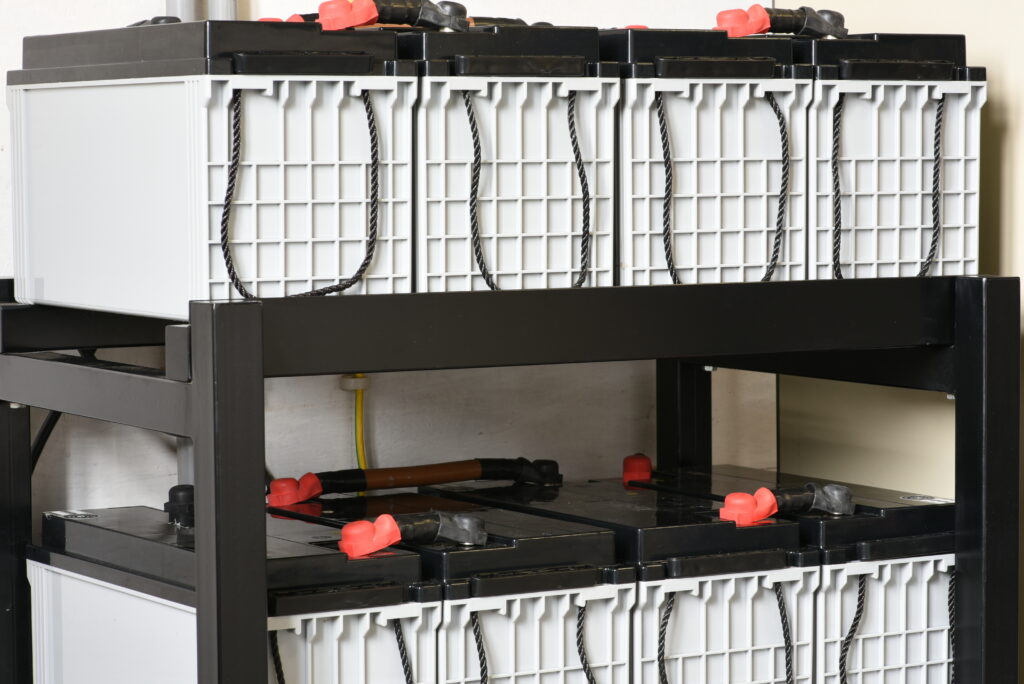
Battery technology should be selected by application. VRLA remains appropriate at many sites. Lithium-ion can provide higher power density, faster recharge, and integrated battery management. Vertiv’s telecom battery guidance also recognizes that the right technology depends on the use case. UL testing and certification requirements, local codes, and authority-having-jurisdiction expectations should be included early in the design process.
Monitoring is central to the retrofit. Battery monitoring systems provide visibility into voltage, temperature, resistance, discharge events, and developing faults. Better information helps maintenance teams direct resources to the sites that need attention.
Build the business case around reliability and operating cost

The business case should include avoided outages, emergency truck rolls, cooling costs, spare-parts exposure, temporary repairs, floor-space constraints, and the cost of carrying unsupported equipment.
GSMA reports that operators consumed about 290 TWh of electricity in 2023 and that networks account for more than three-quarters of electricity use for most operators. More efficient rectifiers, better controls, reduced cooling demand, and smarter monitoring can improve retrofit economics.
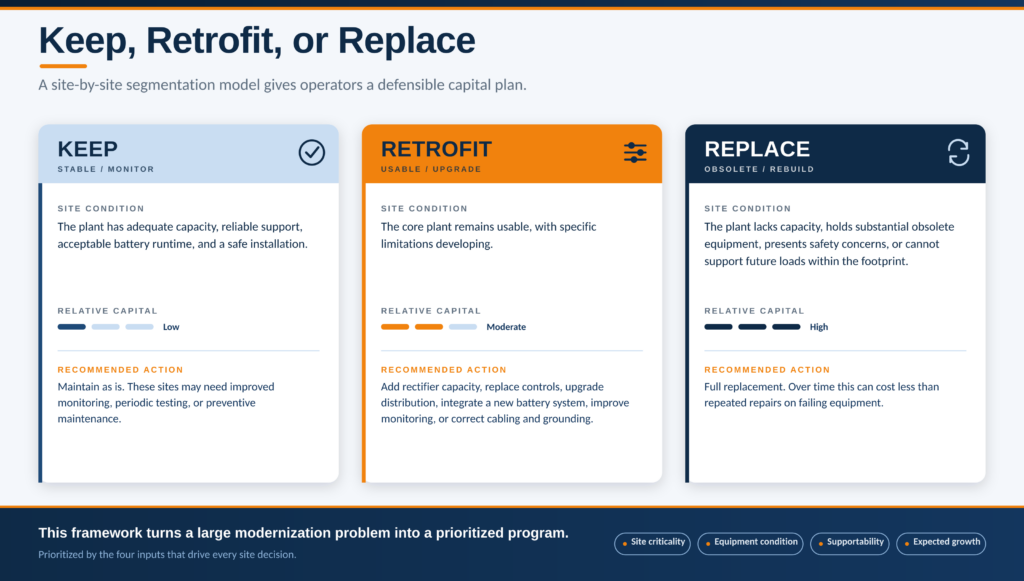
The strongest programs prioritize sites where traffic importance, equipment condition, outage exposure, and growth requirements create the greatest business risk.
Execution matters as much as equipment selection

Telecom power modernization requires engineering, sourcing, field installation, commissioning, testing, documentation, and ongoing service. The partner needs to work across manufacturers and battery chemistries, including live cutover management at mission-critical sites.
Exponential Power provides telecom DC power plant design and installation, battery systems, distribution, cabling, grounding, monitoring, preventive maintenance, and 24/7 emergency support. Its broader telecommunications solutions help operators modernize aging backup power infrastructure and protect network uptime.
The objective is straightforward: identify which sites remain dependable, which can be upgraded efficiently, and which have reached the point where replacement is the responsible decision.